
Gold vs Copper vs Aluminum Wire
Explore the wire bonding process in semiconductor packaging, comparing ball and wedge bonding methods, wire materials, and their roles in creating reliable chip-to-package interconnections.
Kiran
1/5/20265 min read
Gold vs. Copper vs. Aluminum Wire: Choosing the Right Wire for Semiconductor Wire Bonding
Wire bonding remains one of the most widely used interconnect technologies in semiconductor packaging, valued for its reliability, flexibility, and cost effectiveness. While bonding equipment, process parameters, and package design all influence bond quality, wire material selection is one of the most critical decisions in wire bonding.
Among the available options, gold (Au), copper (Cu), and aluminum (Al) wires dominate the industry. Each material brings unique mechanical, electrical, thermal, and reliability characteristics that directly affect manufacturability, yield, and long-term device performance.
This article provides a detailed comparison of gold vs. copper vs. aluminum wire, explaining how each material behaves in wire bonding processes, where it is best applied, and what trade-offs engineers must consider when selecting the optimal wire for a given application.
The Role of Wire Material in Wire Bonding
Wire material is far more than a conductive medium. During bonding, the wire must deform plastically, form a robust metallurgical interface, survive thermal cycling, resist corrosion, and maintain mechanical integrity over the life of the package.
Key properties influenced by wire material include:
Electrical conductivity
Mechanical strength and ductility
Oxidation and corrosion resistance
Intermetallic formation behavior
Compatibility with bond pad metallurgy
Process window robustness
Selecting the wrong wire material can lead to yield loss, reliability failures, or excessive process complexity—even when equipment and bonding techniques are otherwise well optimized.
Gold Wire: The Traditional Standard
Overview of Gold Wire Bonding
Gold wire has long been the industry standard for wire bonding, particularly in ball bonding applications. Its widespread adoption is rooted in gold’s excellent ductility, oxidation resistance, and forgiving process behavior.
Gold wire is commonly used in:
Consumer electronics
Automotive ICs
High-volume logic and memory devices
Fine-pitch ball bonding applications
Advantages of Gold Wire
Excellent Bondability
Gold is highly ductile and does not oxidize easily, allowing it to form consistent, high-quality bonds across a wide process window. This makes gold wire especially tolerant of process variation.
Stable Free-Air Ball Formation
Gold readily forms uniform free-air balls during electrical flame-off (EFO), enabling reliable ball bonding with minimal process tuning.
Strong Metallurgical Bonds
Gold forms reliable intermetallic compounds with aluminum bond pads, providing strong electrical and mechanical connections when properly controlled.
Process Maturity
Gold wire bonding is supported by decades of industry experience, mature equipment designs, and well-understood failure mechanisms.
Limitations of Gold Wire
High Material Cost
Gold is significantly more expensive than copper or aluminum, making it less attractive for cost-sensitive, high-volume applications.
Intermetallic Growth
Gold–aluminum intermetallics can grow over time, especially at elevated temperatures, potentially leading to Kirkendall voiding and bond degradation in long-term reliability scenarios.
Lower Mechanical Strength
Compared to copper, gold wire has lower tensile strength, which can limit its suitability for high-current or mechanically demanding applications.
Copper Wire: The Cost-Effective High-Performance Alternative
Overview of Copper Wire Bonding
Copper wire bonding has gained significant traction as a replacement for gold in many applications. Driven by cost reduction and performance advantages, copper wire is now widely used in high-volume semiconductor manufacturing.
Copper wire is commonly used in:
Consumer and mobile devices
Automotive electronics
High-density packages
Cost-sensitive high-volume products
Advantages of Copper Wire
Lower Material Cost
Copper is substantially less expensive than gold, offering significant cost savings, especially in high-volume production.
Higher Electrical Conductivity
Copper has lower electrical resistivity than gold, resulting in reduced signal loss and improved power efficiency.
Superior Mechanical Strength
Copper wire is stronger and stiffer than gold, providing better resistance to wire sweep, sagging, and mechanical deformation during molding and operation.
Improved High-Temperature Performance
Copper–aluminum intermetallics grow more slowly than gold–aluminum intermetallics, improving long-term reliability in elevated-temperature environments.
Challenges of Copper Wire
Oxidation Sensitivity
Copper oxidizes readily, requiring tighter environmental control, optimized EFO conditions, and often forming gas atmospheres to ensure stable bonding.
Narrower Process Window
Copper wire bonding is less forgiving than gold, demanding tighter control of bonding parameters such as ultrasonic energy, force, and temperature.
Pad and Surface Requirements
Copper bonding typically requires well-controlled pad metallization and surface cleanliness to avoid bond defects and reliability issues.
Despite these challenges, advancements such as palladium-coated copper (PCC) wire have significantly improved copper’s bondability and robustness.
Aluminum Wire: The Power and Legacy Specialist
Overview of Aluminum Wire Bonding
Aluminum wire bonding is most commonly associated with wedge bonding, particularly in power devices and legacy semiconductor applications. Unlike gold and copper, aluminum wire is rarely used for ball bonding.
Aluminum wire is commonly used in:
Power semiconductors
Industrial and automotive devices
High-current applications
Mature and legacy process nodes
Advantages of Aluminum Wire
Excellent Compatibility with Aluminum Pads
Aluminum-to-aluminum bonding avoids dissimilar-metal intermetallic issues, resulting in stable and reliable bonds.
High Current-Carrying Capability
Thick aluminum wires can handle high current loads, making them ideal for power electronics.
Room-Temperature Bonding
Aluminum wedge bonding typically does not require elevated temperatures, reducing thermal stress on devices and substrates.
Cost Efficiency
Aluminum wire is inexpensive and widely available, particularly in larger diameters.
Limitations of Aluminum Wire
Oxide Formation
Aluminum forms a native oxide layer that must be disrupted during bonding, requiring precise ultrasonic energy control.
Lower Electrical Conductivity
Aluminum has higher resistivity than both gold and copper, which can impact performance in high-speed or low-loss applications.
Limited Fine-Pitch Capability
Aluminum wire is generally used in larger diameters, making it less suitable for fine-pitch or high-density interconnects.
Electrical and Mechanical Property Comparison
From an electrical perspective, copper offers the best conductivity, followed by gold, with aluminum trailing behind. Mechanically, copper provides the highest tensile strength, while gold offers superior ductility and aluminum strikes a balance for high-current use cases.
Key comparisons:
Conductivity: Copper > Gold > Aluminum
Strength: Copper > Aluminum > Gold
Ductility: Gold > Aluminum > Copper
These differences influence loop stability, wire sweep resistance, and long-term fatigue behavior.
Reliability Considerations Across Wire Materials
Intermetallic Formation
Intermetallic growth is a critical reliability factor in wire bonding. Gold–aluminum intermetallics grow faster and can form voids over time, while copper–aluminum systems exhibit slower growth and improved stability.
Aluminum-to-aluminum bonds avoid dissimilar-metal intermetallics altogether, contributing to robust long-term performance.
Corrosion and Environmental Stability
Gold is inherently corrosion resistant, while copper and aluminum require careful process control and protective measures to mitigate oxidation and corrosion risks.
Thermal Cycling and Fatigue
Copper’s higher stiffness can increase stress at bond interfaces during thermal cycling, while gold’s ductility provides better stress relief. Aluminum performs well in power cycling environments when properly designed.
Application-Driven Wire Material Selection
Consumer Electronics
Copper wire is increasingly favored due to its cost advantages and performance benefits, with gold still used in some high-reliability or fine-pitch designs.
Automotive and Industrial Electronics
Both copper and aluminum wires are widely used. Aluminum remains dominant in power modules, while copper is common in control and logic ICs.
Power Semiconductors
Aluminum wire is often the preferred choice due to its high current capability, robust bonding behavior, and compatibility with thick aluminum metallization.
Manufacturing and Process Considerations
Selecting a wire material affects:
Bonding equipment requirements
Process window tuning
Inspection and monitoring needs
Yield sensitivity
Copper wire bonding generally demands the most rigorous process control, while gold offers the widest process margin. Aluminum wedge bonding requires specialized tooling and ultrasonic optimization.
Future Trends in Wire Materials
Ongoing development in wire bonding materials includes:
Enhanced palladium-coated copper wires
Thinner, stronger copper alloys
Improved aluminum wire formulations for power devices
Hybrid approaches combining multiple wire materials in a single package
These innovations continue to extend the relevance of wire bonding across evolving semiconductor applications.
Conclusion
Gold, copper, and aluminum wires each play essential roles in semiconductor wire bonding. Gold offers unmatched process robustness and ease of use, copper delivers superior electrical and mechanical performance at lower cost, and aluminum remains indispensable for power and legacy applications.
There is no universally “best” wire material. The optimal choice depends on device design, performance requirements, reliability expectations, manufacturing volume, and cost constraints. By understanding the strengths and limitations of each material, engineers can make informed decisions that balance performance, yield, and long-term reliability.
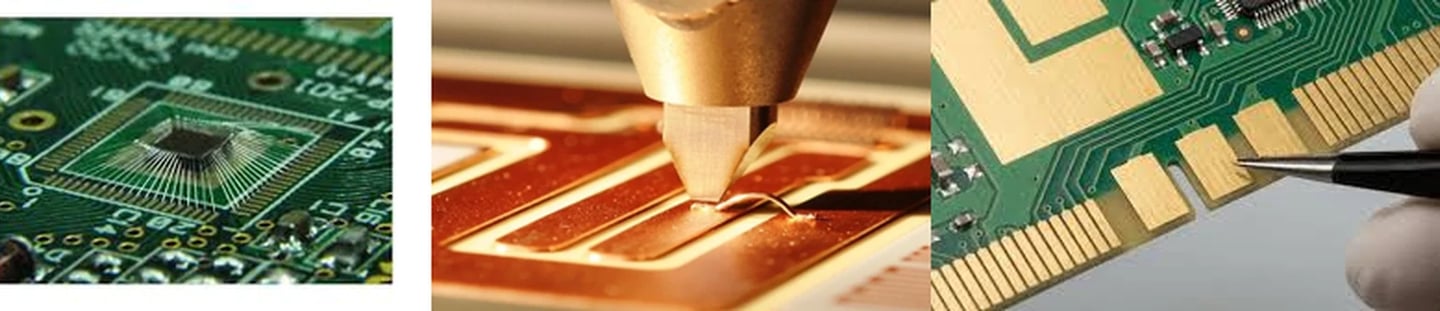
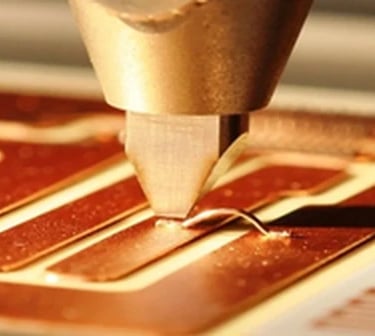
This image highlights gold, copper, and aluminum bonding wires used in semiconductor packaging, showing how different wire materials enable reliable electrical connections between chips and substrates.