
Ultrasonic Energy in Wire Bonding
Learn how ultrasonic energy enables reliable wire bonding in semiconductor packaging, covering its role in bond formation, process control, and impact on yield and long-term reliability.
Kiran
1/5/20265 min read
Ultrasonic Energy in Wire Bonding: Principles, Process Control, and Reliability Impact
Ultrasonic energy is one of the most critical—and least intuitively understood—elements of the wire bonding process. While bond force, temperature, and wire material are often discussed openly, ultrasonic energy is the parameter that ultimately enables metallurgical bonding at the interface between the wire and the bond pad. When improperly applied, it is also a leading contributor to many common wire bonding failure modes.
In modern semiconductor packaging, where wire diameters continue to shrink, pad metallization stacks grow thinner, and reliability requirements increase, understanding how ultrasonic energy works—and how to control it—is essential. This article provides a comprehensive technical overview of ultrasonic energy in wire bonding, explaining its physical role, how it interacts with materials, how it is controlled in manufacturing, and how it affects yield and long-term reliability.
What Is Ultrasonic Energy in Wire Bonding?
Ultrasonic energy in wire bonding refers to high-frequency mechanical vibrations, typically in the range of 60–140 kHz, applied through the bonding tool during the bonding process. These vibrations are transmitted from the transducer, through the bonding capillary or wedge, into the wire and bond interface.
The purpose of ultrasonic energy is not to melt materials, but to:
Break surface oxides and contaminants
Promote plastic deformation of the wire
Enable intimate metal-to-metal contact
Drive atomic diffusion and intermetallic formation
Without ultrasonic energy, reliable bonding at practical temperatures and forces would be extremely difficult, particularly for materials such as aluminum and copper that form stable surface oxides.
The Physics Behind Ultrasonic Bond Formation
Interfacial Scrubbing and Oxide Disruption
At the microscopic level, bond pads and wires are not perfectly smooth or clean. Thin oxide layers, adsorbed contaminants, and surface roughness prevent direct metal contact. Ultrasonic vibration causes micro-sliding motion at the bond interface, effectively scrubbing away oxides and contaminants.
This localized friction:
Breaks brittle oxide films
Exposes fresh metal surfaces
Increases real contact area
Once clean metal surfaces are in contact under pressure, atomic bonding can occur.
Plastic Deformation and Energy Dissipation
Ultrasonic energy causes localized plastic deformation in the wire, especially near the bond foot. This deformation:
Increases contact area
Reduces interfacial gaps
Concentrates stress at asperities
Energy is dissipated as heat at the interface, but temperatures remain well below melting points. This combination of pressure, vibration, and localized heating enables solid-state bonding.
Ultrasonic Energy in Different Wire Bonding Methods
Ball Bonding (Thermosonic Bonding)
In ball bonding, ultrasonic energy is applied together with heat and force. This is known as thermosonic bonding.
Key characteristics:
Ultrasonic energy assists ball flattening
Heat softens the wire and pad surface
Lower ultrasonic amplitude is required compared to room-temperature bonding
Ball bonding typically uses gold or copper wire, and ultrasonic energy must be carefully balanced to avoid pad damage or excessive intermetallic growth.
Wedge Bonding (Ultrasonic Bonding)
Wedge bonding often relies almost entirely on ultrasonic energy and force, with little or no external heating.
Key characteristics:
Higher ultrasonic energy levels are common
Aluminum wire bonding is particularly dependent on ultrasonic scrubbing
Bonding occurs at or near room temperature
Because wedge bonding lacks thermal assistance, ultrasonic energy control becomes even more critical.
Ultrasonic Energy Parameters and Control Variables
Ultrasonic energy in wire bonding is not a single fixed value. It is defined and controlled through several interrelated parameters.
Ultrasonic Power (Amplitude)
Ultrasonic power determines the vibration amplitude delivered to the bond interface. Higher power increases scrubbing action but also raises the risk of:
Pad cratering
Heel cracking
Excessive wire deformation
Lower power may result in weak bonds or non-sticks.
Bond Time
Bond time defines how long ultrasonic energy is applied. Even moderate ultrasonic power can cause damage if applied for too long, while short bond times may not deliver sufficient energy for reliable bonding.
Bond Force Interaction
Ultrasonic energy does not act alone. Bond force strongly influences how energy is transferred into the wire and pad. Too little force reduces scrubbing efficiency; too much force increases substrate stress and damage risk.
Frequency Stability
Modern bonding systems operate at fixed ultrasonic frequencies. Frequency drift or poor coupling between transducer, horn, and tool can reduce effective energy transfer, leading to inconsistent bonding.
Material-Specific Response to Ultrasonic Energy
Gold Wire
Gold is highly ductile and responds well to ultrasonic energy. It deforms easily, allowing effective scrubbing at relatively low ultrasonic power.
Advantages:
Wide process window
Lower risk of pad damage
Stable bond formation
However, excessive ultrasonic energy can accelerate gold–aluminum intermetallic growth, impacting long-term reliability.
Copper Wire
Copper is stiffer and harder than gold, requiring higher ultrasonic energy to achieve reliable bonds.
Challenges include:
Narrower process window
Higher risk of heel cracking
Greater sensitivity to oxidation
Precise ultrasonic control is essential for copper wire bonding, especially in fine-pitch applications.
Aluminum Wire
Aluminum wire forms a strong native oxide layer, making ultrasonic energy essential for bond formation.
Characteristics:
Strong dependence on ultrasonic scrubbing
Higher ultrasonic energy requirements
Increased risk of pad damage if overdriven
Aluminum wedge bonding is particularly sensitive to ultrasonic parameter optimization.
Common Failure Modes Linked to Ultrasonic Energy
Improper ultrasonic energy settings are a root cause of many wire bonding failures.
Insufficient Ultrasonic Energy
Leads to:
Non-stick on pad (NSOP)
Weak bonds
Early bond lift
These failures often pass visual inspection but fail during pull testing or thermal cycling.
Excessive Ultrasonic Energy
Leads to:
Heel cracking
Pad cratering
Substrate damage
Excessive intermetallic formation
These failures may be latent, appearing only after reliability stress.
Inconsistent Energy Delivery
Results in:
High process variability
Intermittent electrical failures
Poor yield stability
Inconsistency may stem from tool wear, transducer aging, or poor coupling.
Inspection and Monitoring of Ultrasonic Bond Quality
To ensure ultrasonic energy is properly applied, manufacturers rely on multiple monitoring and inspection techniques.
Common methods include:
Wire pull and shear testing
Optical inspection of bond deformation
Process signature monitoring (power vs time curves)
Inline acoustic or vibration monitoring
Advanced bonders can detect abnormal energy transfer in real time, enabling corrective action before yield loss occurs.
Process Optimization Strategies
Establishing Robust Process Windows
Rather than targeting a single ultrasonic setting, robust processes define acceptable ranges for:
Ultrasonic power
Bond force
Bond time
This approach improves tolerance to normal variation.
Tool and Equipment Maintenance
Worn capillaries or wedges alter energy transfer efficiency. Regular tool inspection and replacement are critical to maintaining consistent ultrasonic delivery.
Material and Pad Stack Alignment
Pad metallurgy, thickness, and underlying dielectrics influence how ultrasonic energy propagates. Close alignment between wire material and pad design improves bond robustness.
Ultrasonic Energy in Advanced Packaging
As packaging technologies evolve, ultrasonic energy control becomes more challenging.
Trends include:
Thinner bond pads
Low-k dielectric stacks
Finer wire diameters
Multi-die and heterogeneous packages
These factors reduce mechanical margins, making excessive ultrasonic energy particularly dangerous. Advanced packages demand tighter control, improved monitoring, and closer collaboration between design and manufacturing teams.
Data-Driven Control of Ultrasonic Bonding
Modern backend manufacturing increasingly uses data analytics to optimize ultrasonic bonding.
By analyzing:
Energy delivery profiles
Bond quality metrics
Failure correlations
manufacturers can fine-tune ultrasonic parameters proactively, reducing defects and improving long-term reliability.
Conclusion
Ultrasonic energy is the enabling force behind reliable wire bonding. It facilitates oxide removal, plastic deformation, and metallurgical bond formation—but it also introduces significant risk when misapplied.
Understanding how ultrasonic energy interacts with wire materials, bond pads, and process parameters allows engineers to strike the critical balance between strong bonds and minimal damage. As wire bonding continues to serve advanced and demanding semiconductor applications, mastery of ultrasonic energy control will remain a cornerstone of backend manufacturing excellence.
Backend Manufacturing Support with Silicon Craft Technologies
Effective control of ultrasonic energy in wire bonding requires more than parameter tuning—it demands a deep understanding of backend assembly interactions, material behavior, and reliability trade-offs across the full manufacturing flow. Silicon Craft Technologies provides engineering-driven backend semiconductor manufacturing support aligned with these challenges.
With experience across wire bonding process development, ultrasonic parameter optimization, and failure analysis, Silicon Craft Technologies supports customers in identifying the root causes of bond variability, heel cracking, pad damage, and latent reliability risks linked to ultrasonic energy misuse. Their approach emphasizes close collaboration during development and scale-up, ensuring bonding processes are robust, repeatable, and matched to device architecture and material stacks.
By combining backend process expertise with flexible low-to-medium volume manufacturing capabilities, Silicon Craft Technologies helps customers achieve consistent wire bond quality, improved yield, and long-term reliability in advanced semiconductor packaging applications.
.
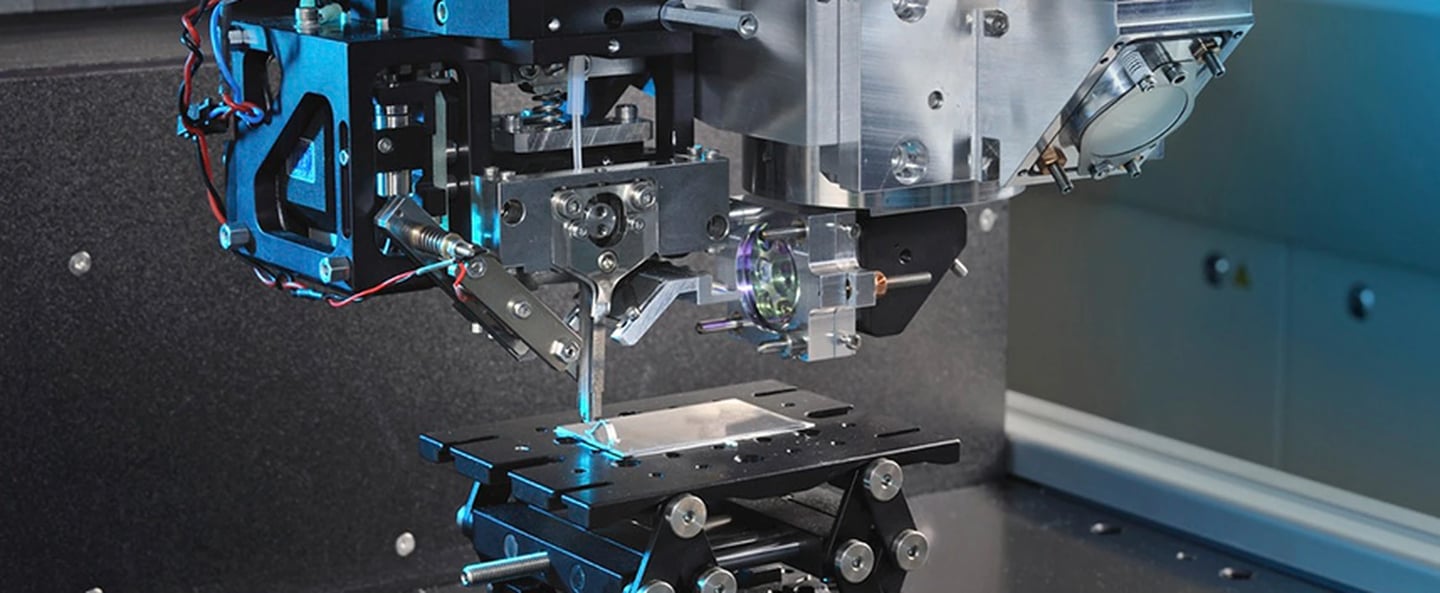
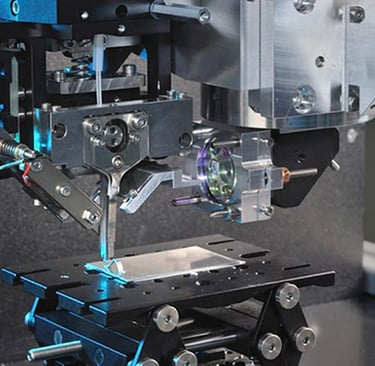
This image shows an ultrasonic wire bonding system used in semiconductor packaging, where controlled ultrasonic energy enables reliable metal-to-metal bonding between fine wires and bond pads.