
Wire Bond Pull & Shear Testing
A practical guide to wire bond pull and shear testing in semiconductor packaging, explaining test methods, failure modes, acceptance criteria, and how mechanical testing supports yield control and long-term reliability.
Kiran
1/6/20265 min read
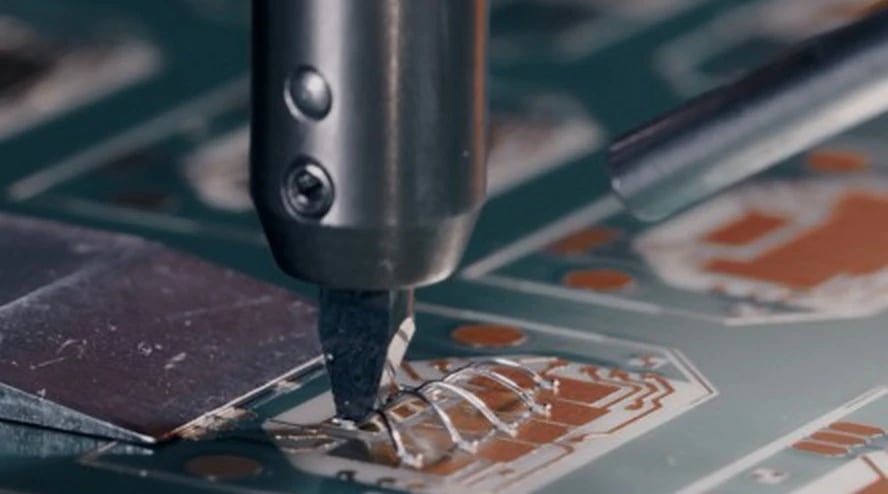
This image shows a wire bond shear test being performed on a semiconductor package, where controlled lateral force is applied to evaluate bond strength and interfacial integrity.
Wire Bond Pull & Shear Testing: Methods, Standards, and Reliability Insight in Semiconductor Packaging
Wire bonding remains one of the most widely used interconnect technologies in semiconductor packaging, and its reliability is critical to overall device performance. While visual inspection can identify gross defects, it cannot reliably predict long-term bond integrity. This is where wire bond pull and shear testing play a central role.
Pull and shear tests are cornerstone mechanical evaluation methods used to quantify bond strength, assess process stability, and detect latent defects that may lead to field failures. These tests are applied throughout backend manufacturing—from process development and qualification to in-line monitoring and failure analysis—making them essential tools for yield control and reliability assurance.
This article provides a comprehensive overview of wire bond pull and shear testing, explaining how each method works, what failure modes they reveal, how results are interpreted, and why they are indispensable in modern semiconductor assembly.
Why Mechanical Testing of Wire Bonds Is Necessary
Wire bonds serve both electrical and mechanical functions. They must maintain electrical continuity while absorbing thermal expansion mismatch, vibration, and mechanical shock over the life of the device. A bond that appears visually acceptable may still be mechanically weak or poorly formed at the metallurgical interface.
Mechanical testing is used to:
Quantify bond strength and consistency
Detect weak or marginal bonds
Validate process windows during development
Monitor process drift in production
Support reliability qualification and root-cause analysis
Among the available methods, pull testing and shear testing are the most widely adopted due to their effectiveness and relative simplicity.
Overview of Wire Bond Pull Testing
What Is Wire Bond Pull Testing?
Wire bond pull testing measures the force required to pull a bonded wire until failure. A hook or probe is placed under the wire loop and pulled upward at a controlled rate until the wire breaks or a bond fails.
The test provides both:
Quantitative data (maximum pull force)
Qualitative information (failure location and mode)
Types of Pull Tests
Several pull test configurations are commonly used:
Standard pull test: The wire is pulled at mid-span to assess overall bond integrity.
Low-loop pull test: Used for fine-pitch or low-loop applications where access is limited.
Destructive pull test: The wire is pulled until failure to characterize strength margins.
Each configuration is selected based on wire diameter, loop geometry, and package design.
Failure Modes Observed in Pull Testing
Pull testing does not merely indicate whether a bond is “strong” or “weak.” The failure mode provides critical insight into process health.
Common pull test failure modes include:
Wire break (mid-span or neck): Often indicates a strong bond; typically desirable in qualification testing.
Heel break: May suggest excessive stress, aggressive looping, or improper ultrasonic energy.
First bond lift: Indicates weak bonding to the pad, often due to contamination or insufficient energy.
Second bond lift: Suggests issues with leadframe or substrate bonding conditions.
Analyzing failure mode distributions is often more informative than average pull force alone.
Overview of Wire Bond Shear Testing
What Is Wire Bond Shear Testing?
Wire bond shear testing measures the force required to laterally shear a bonded ball or wedge off the bond pad. A shear tool applies horizontal force at a defined height until the bond fails.
Shear testing primarily evaluates:
Bond-to-pad metallurgical integrity
Pad adhesion and underlying dielectric robustness
It is most commonly applied to ball bonds, though wedge bond shear testing is also used in specific applications.
Shear Test Failure Modes and Interpretation
Shear testing reveals different failure mechanisms than pull testing.
Common shear failure modes include:
Ball shear with pad metallization removal: Often indicates strong intermetallic bonding but potential pad stack weakness.
Clean interfacial separation: Suggests poor metallurgical bonding or surface contamination.
Dielectric cratering: Indicates excessive bonding force or ultrasonic energy damaging the underlying structure.
Because shear testing directly stresses the bond interface, it is especially valuable for assessing pad stack integrity, particularly in advanced nodes with low-k dielectrics.
Pull vs. Shear Testing: Complementary Roles
Pull and shear testing are not interchangeable; they provide complementary information.
Pull testing evaluates the entire wire system, including loop geometry and wire strength.
Shear testing focuses on the bond interface and pad adhesion.
In practice, both methods are used together during:
Process development
Material changes (wire, pad metallization)
New package introduction
Reliability qualification
Relying on only one method increases the risk of undetected failure mechanisms.
Standards and Acceptance Criteria
Wire bond pull and shear testing are governed by industry standards that define test methods, minimum force requirements, and acceptable failure modes.
Commonly referenced standards include:
JEDEC guidelines
MIL-STD and automotive specifications
Customer-specific qualification requirements
Acceptance criteria depend on:
Wire material and diameter
Bond type (ball or wedge)
Application reliability requirements
Importantly, passing force thresholds alone is not sufficient—failure mode compliance is equally critical.
Pull & Shear Testing in Fine-Pitch and Advanced Packages
As wire bonding moves into fine-pitch and advanced packaging regimes, mechanical testing becomes more challenging and more important.
Challenges include:
Reduced wire access for pull hooks
Lower allowable force margins
Increased sensitivity to test-induced damage
Advanced packages often require:
Customized pull hook geometries
Lower pull rates to avoid artificial failures
Careful interpretation of results to distinguish real defects from test artifacts
Mechanical testing strategies must evolve alongside package complexity.
Role of Pull & Shear Testing in Reliability Qualification
Pull and shear testing are integral to reliability qualification programs. Devices subjected to thermal cycling, power cycling, humidity, or vibration testing are often mechanically tested afterward to identify degradation mechanisms.
Common reliability-related findings include:
Reduced pull strength after thermal aging
Shift in failure mode distributions
Increased heel cracking frequency
These results help correlate mechanical degradation with real-world operating conditions.
Process Monitoring and Statistical Control
In production, pull and shear testing are commonly used as process monitors rather than qualification tools.
Typical practices include:
Sampling at defined intervals
Tracking average force and distribution width
Monitoring failure mode trends
Because yield loss is often driven by rare events rather than mean shifts, trend analysis is often more valuable than absolute values.
Limitations of Pull & Shear Testing
While powerful, pull and shear testing have limitations:
They are destructive tests
Sample sizes are limited
Results depend on test setup and operator technique
As a result, mechanical testing is most effective when combined with:
Optical inspection
Electrical testing
Process signature monitoring
No single method provides complete coverage of wire bond reliability.
Backend Manufacturing Support with Silicon Craft Technologies
Effective use of wire bond pull and shear testing requires more than test execution—it demands expert interpretation and integration into the broader backend manufacturing strategy. Silicon Craft Technologies provides engineering-driven backend support aligned with these needs.
With experience across wire bonding process development, mechanical test characterization, and failure analysis, Silicon Craft Technologies helps customers define appropriate test strategies, interpret failure modes, and link mechanical data to process conditions. Their collaborative approach supports qualification, yield monitoring, and continuous improvement across low-to-medium volume production.
By integrating pull and shear testing into a disciplined backend control framework, Silicon Craft Technologies enables customers to detect risks early, stabilize processes, and improve long-term package reliability.
Conclusion
Wire bond pull and shear testing remain essential tools in semiconductor backend manufacturing. They provide critical insight into bond strength, interfacial integrity, and process stability—far beyond what visual inspection alone can reveal.
As packages become more complex and wire bonding operates closer to its physical limits, disciplined mechanical testing and expert interpretation are increasingly important. When applied correctly, pull and shear testing help bridge the gap between manufacturing capability and long-term reliability, ensuring that wire bonds perform as intended throughout the life of the device.